
TAINO People: Separating Historical Reality from Modern Misidentification
- TayU Yaho
- May 3
- 2 min read

Some Black descendants of slaves in America identify as Native American Indians, rejecting or ignoring their African ancestry. Similarly, some Black people in the Caribbean call themselves Taíno natives, overlooking the documented fact that the islands were heavily populated with African slaves. Their African origins are clear, and any claims of “native” status should be verified with DNA evidence before being accepted. We cannot ignore the impact of the trans-Atlantic slave trade in shaping these populations’ mixed identities; it directly affects how we understand their heritage.
Early European chroniclers and historians who observed the Taíno people of the Caribbean in the late 15th and early 16th centuries provide clear, consistent descriptions of their appearance before the trans-Atlantic slave trade:
Skin color: The Taíno had light to medium brown skin, often compared to copper or bronze. Chroniclers did not depict them as black Africans.
Hair: Their hair was straight to wavy and generally dark; some accounts note they styled or tied it.
Facial features: Observers recorded high cheekbones, straight noses, and broad faces, likening them to indigenous peoples of the Americas rather than Africans or Europeans.
Body stature: The Taíno were tall, well-proportioned, and muscular, reflecting a lifestyle of fishing, farming, and canoeing. Average male heights ranged from roughly 5’6” to 5’9”.
Adornment: They used body paint, tattoos, and gold ornaments, with feathered headdresses for chiefs; jewelry was typically small gold pieces or shells.
Primary sources include:
Bartolomé de las Casas (1484–1566) – In Historia de las Indias, he emphasized that the Taíno were physically robust, morally inclined, and of lighter brown complexion.
Gonzalo Fernández de Oviedo (1478–1557) – In Historia General y Natural de las Indias, he described their straight black hair, medium-brown skin, and well-formed bodies.
Antonio de Herrera y Tordesillas (1549–1625) – In Historia General de los Hechos de los Castellanos en las Islas y Tierra Firme del Mar Océano, he noted their dignified bearing, medium brown skin, and straight hair.
No pre-1600 accounts describe them as having the coarse, woolly hair or dark skin associated with Sub-Saharan Africans. Their appearance was consistently distinct from African populations known to Europeans at the time. This historical record should guide any investigation into claims of Taíno identity today, reminding us to consider the profound effects of the slave trade on the Caribbean population before asserting a “native” identity.
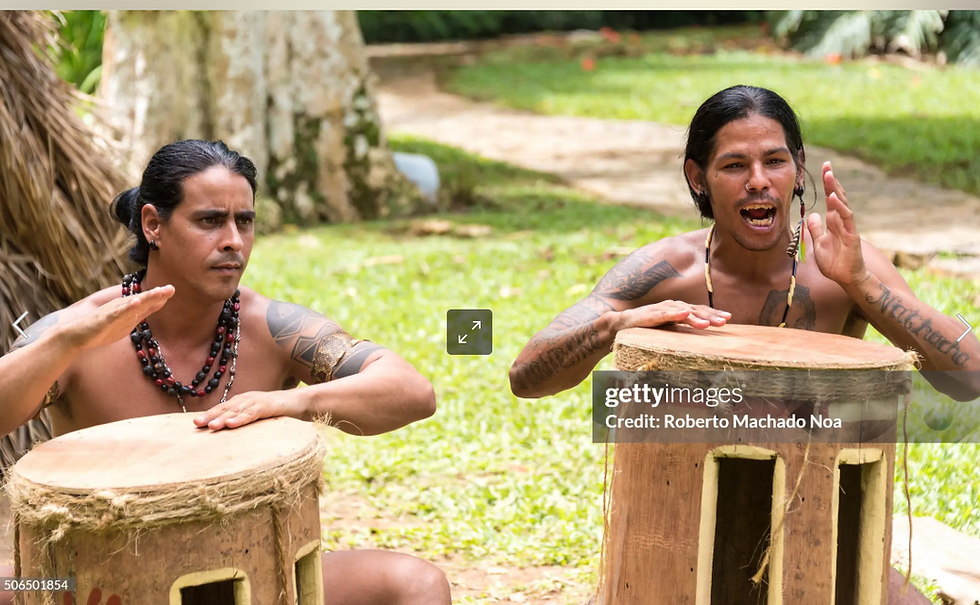


I think a lot of Black people, especially American blacks, get caught up with the idea of native identity because they forget that the historical accounts actually point to a number of the African slaves intermixing with native populations. This is does not however prove that we as collective PRIMARILY come from native populations.
I watched Sis. Ashanda's video that highlighted IshowSpeed visiting the caribbean island and highlighting the Taino people. The people that stood with him literally look like regular black folks. They most likely are the people that descended from the slaves that intermixed with the native Taino people. Most of our ancestry as black people in the diaspora comes from Africa whether we want to believe…